SylLy Acres

Our Roatan Adventure


Leave a comment

After lunch

Note: WordPress keeps changing it’s editing interface on me and now I can’t figure out how to make the captions show up when you roll over them. Sorry! I think you have to click on the individual photo but I’m not even getting that to work this morning due to really slow internet.

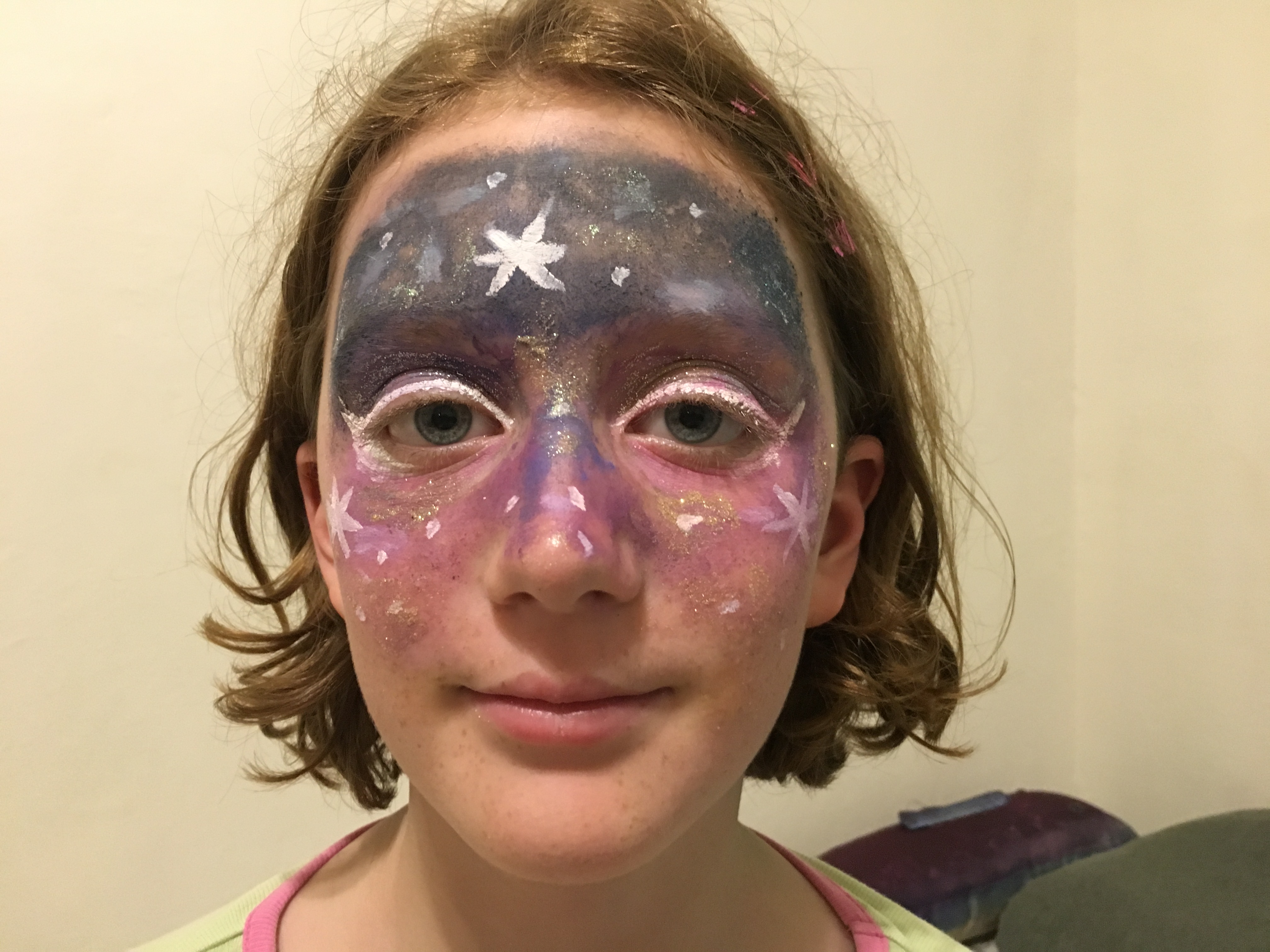
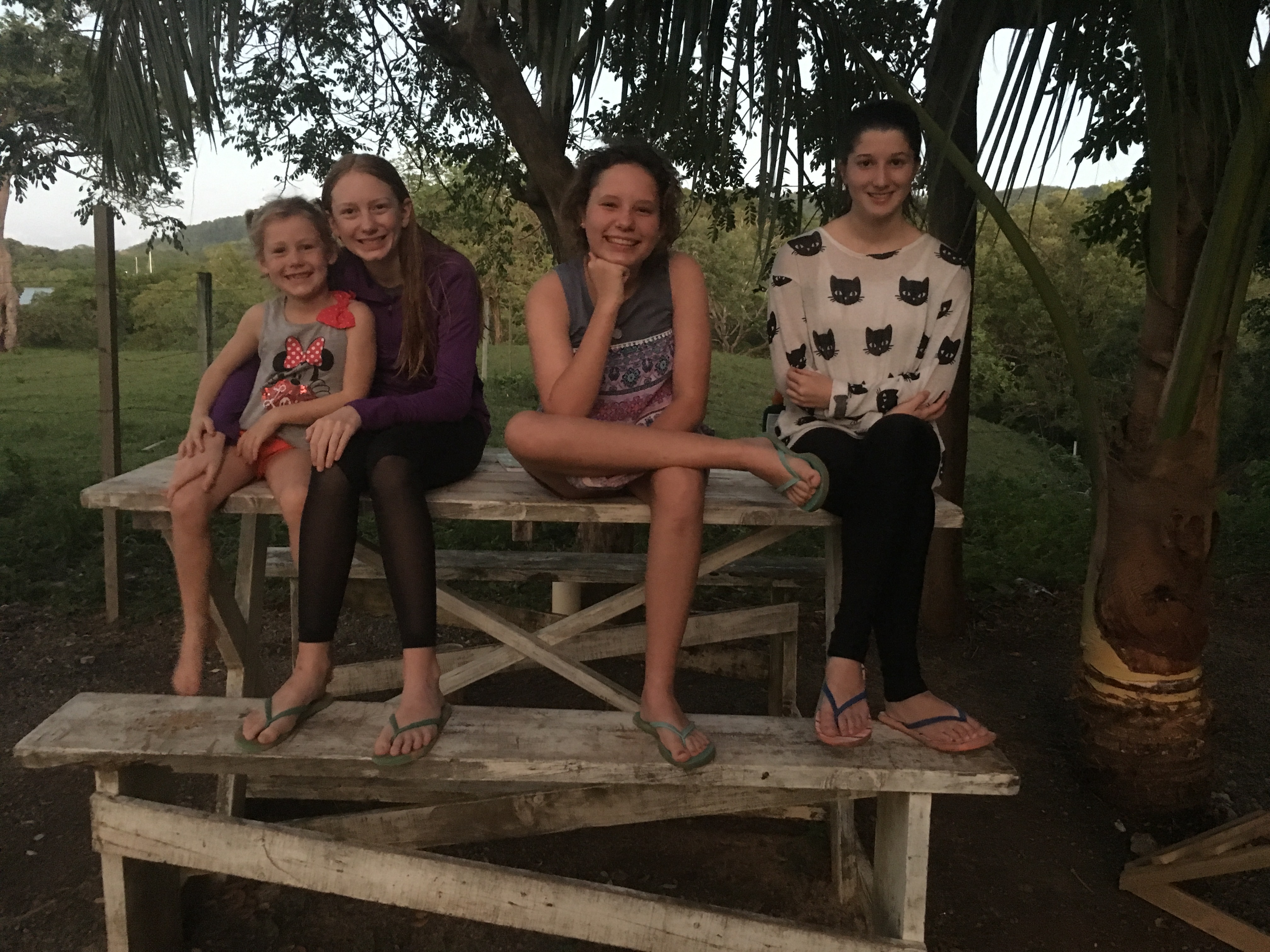
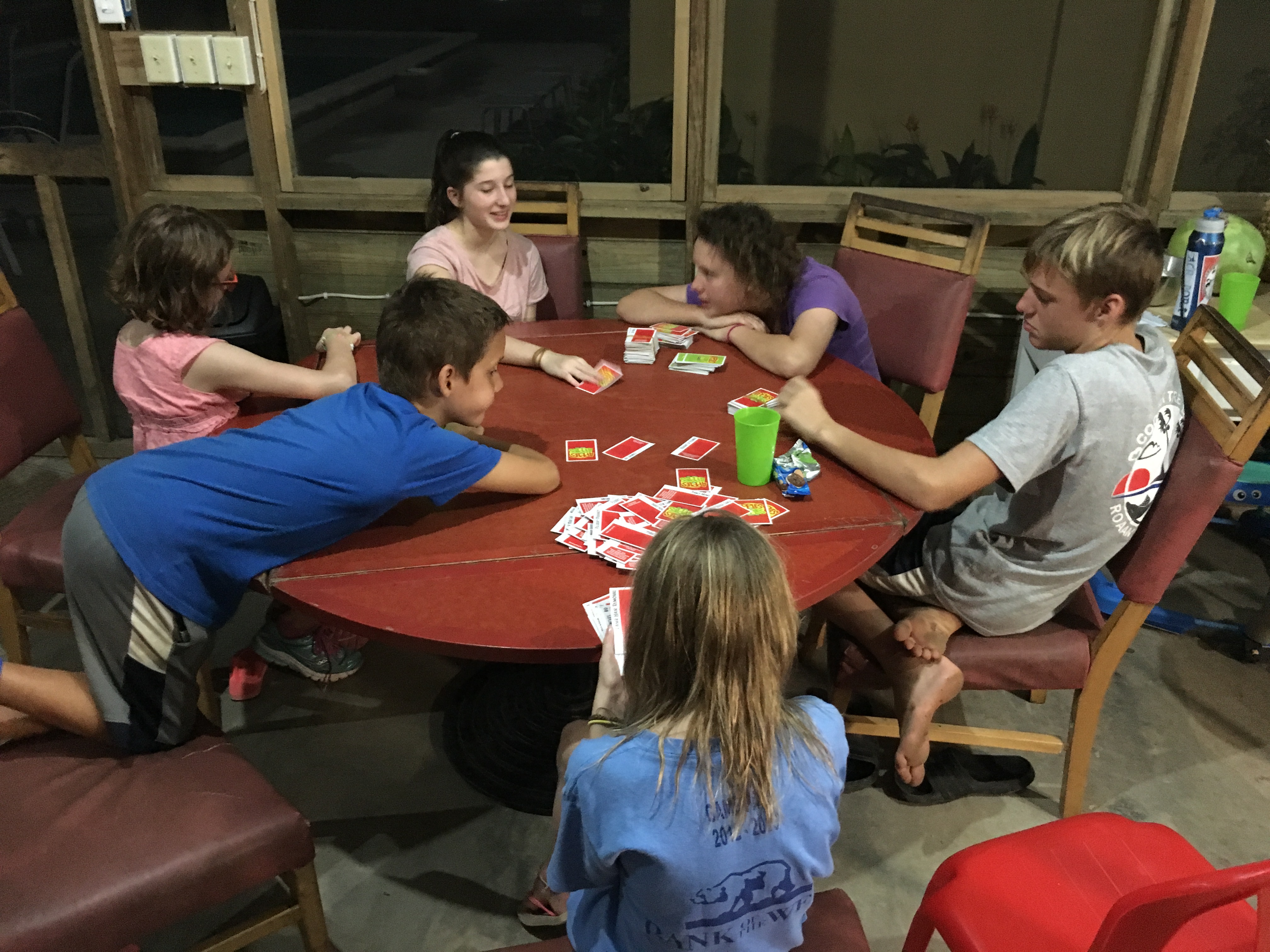
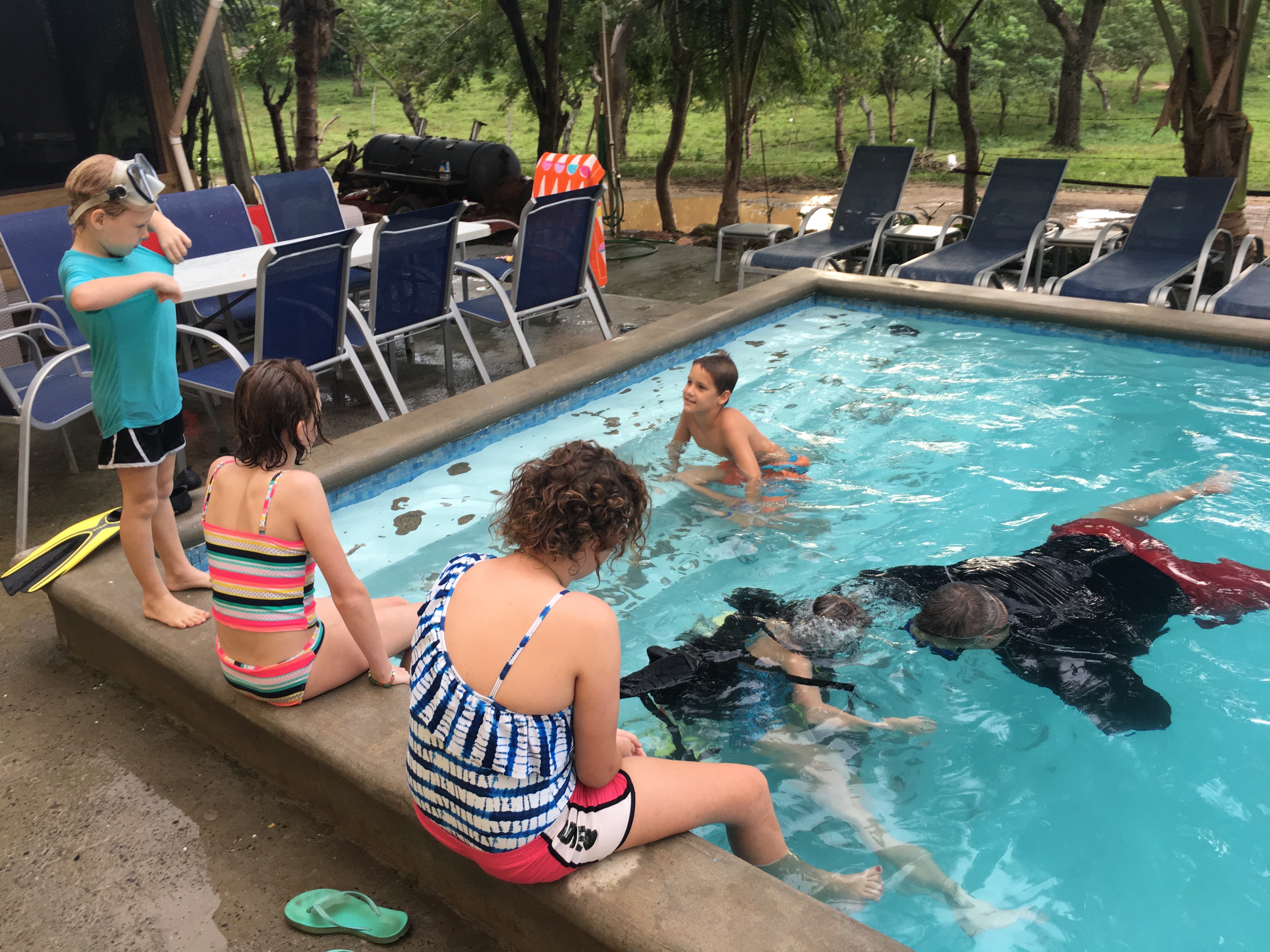
Our daily rhythm is usually the same: school work in the morning and free afternoons for playing, swimming and exploring. Some afternoons the kids stay here at Roatan Refuge where we are living. The VanZee’s, who operate Roatan Refuge, have 6 children, and the Christman’s have 3 so there is quite gaggle of kids to entertain each other. The kids love swimming in the pool, doing face paints or playing games. All the playing usually continues after dinner as well!
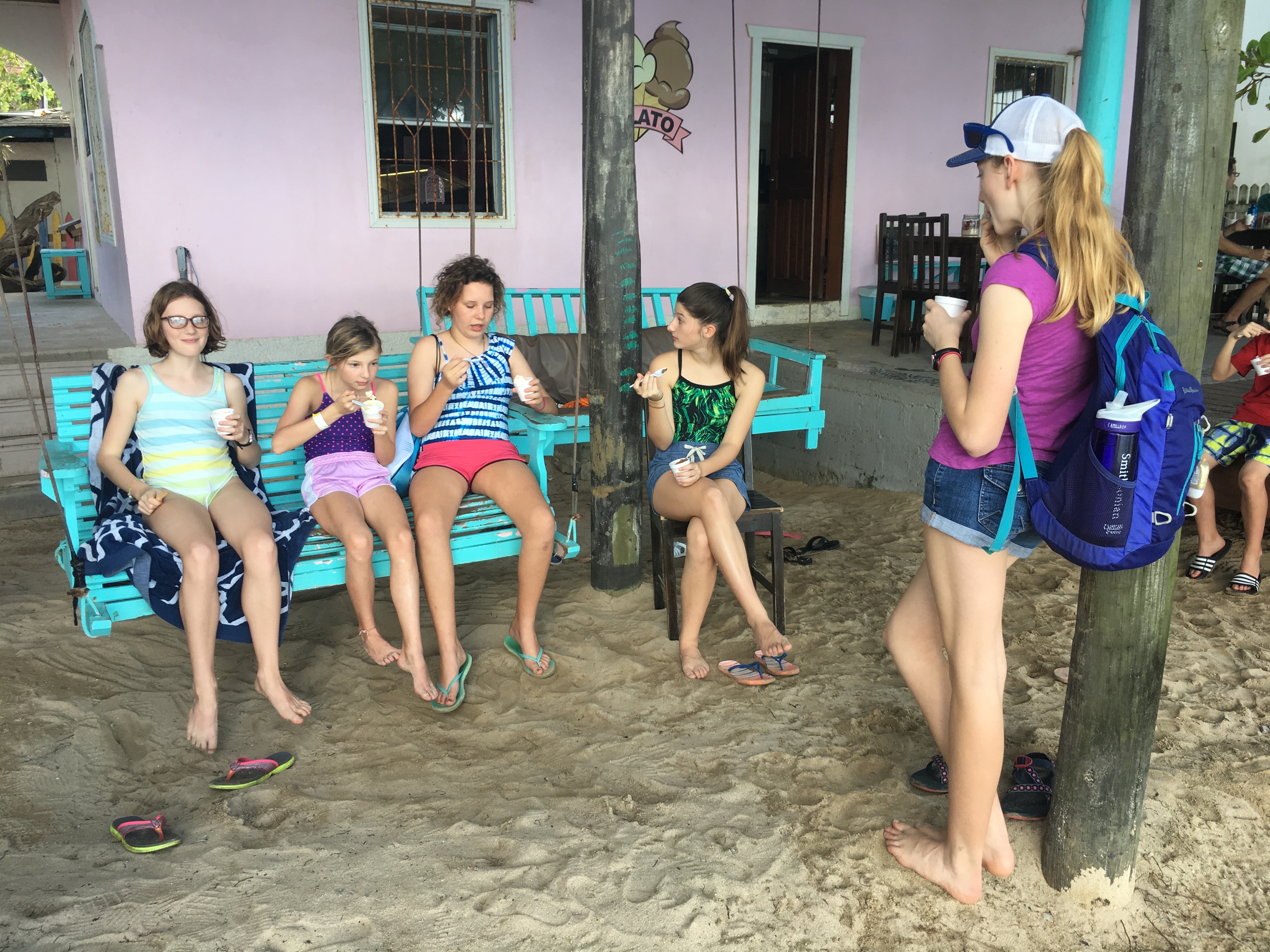
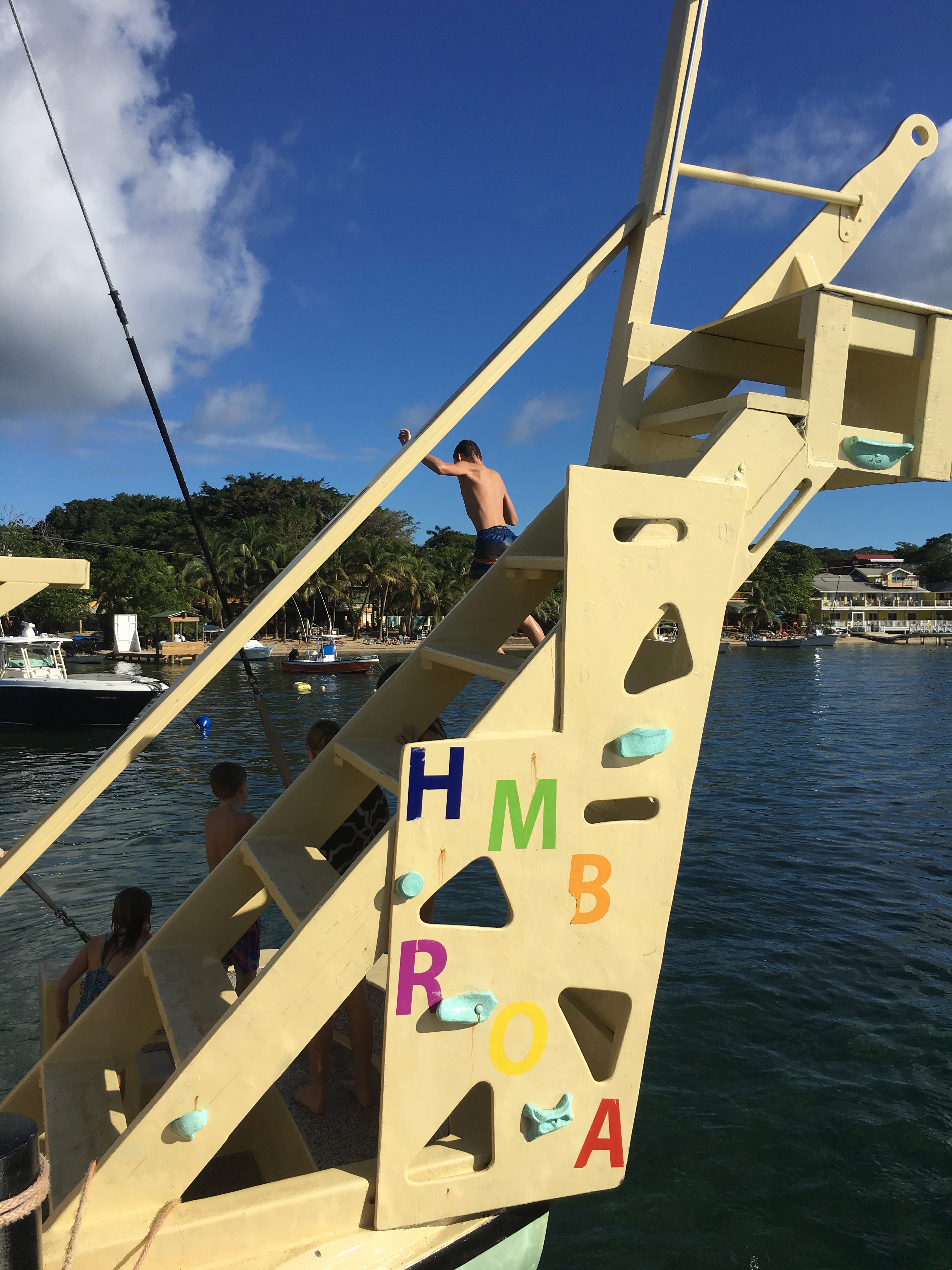
Some afternoons we go to the closest beach, West End, to swim, snorkel, and play on an old sailboat (it’s like a huge jungle gym out in the water). Gelato is sometimes involved.
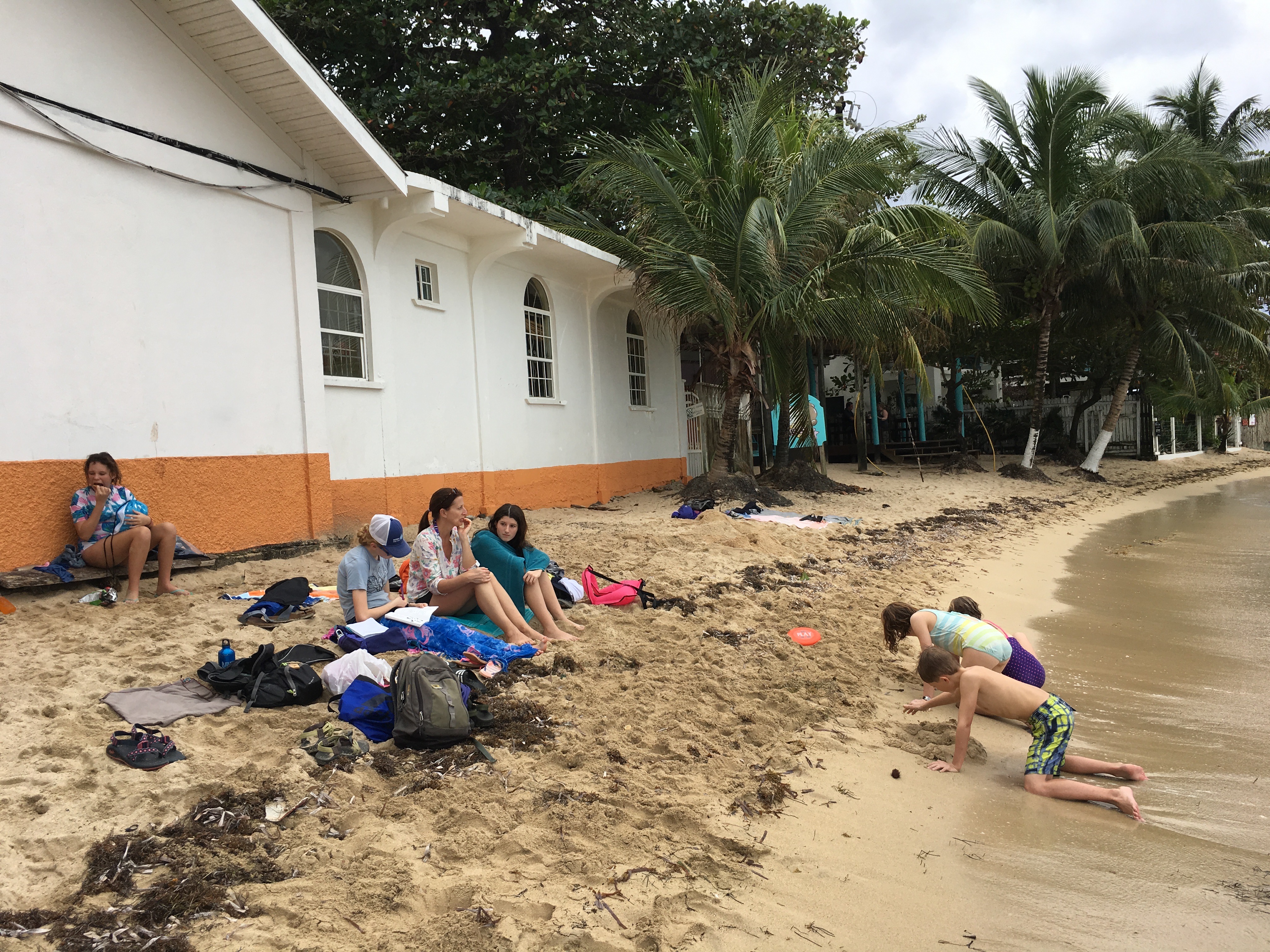
My favorite times, though, are when we get out and explore the island a little more.

SOL FOUNDATION and BICA

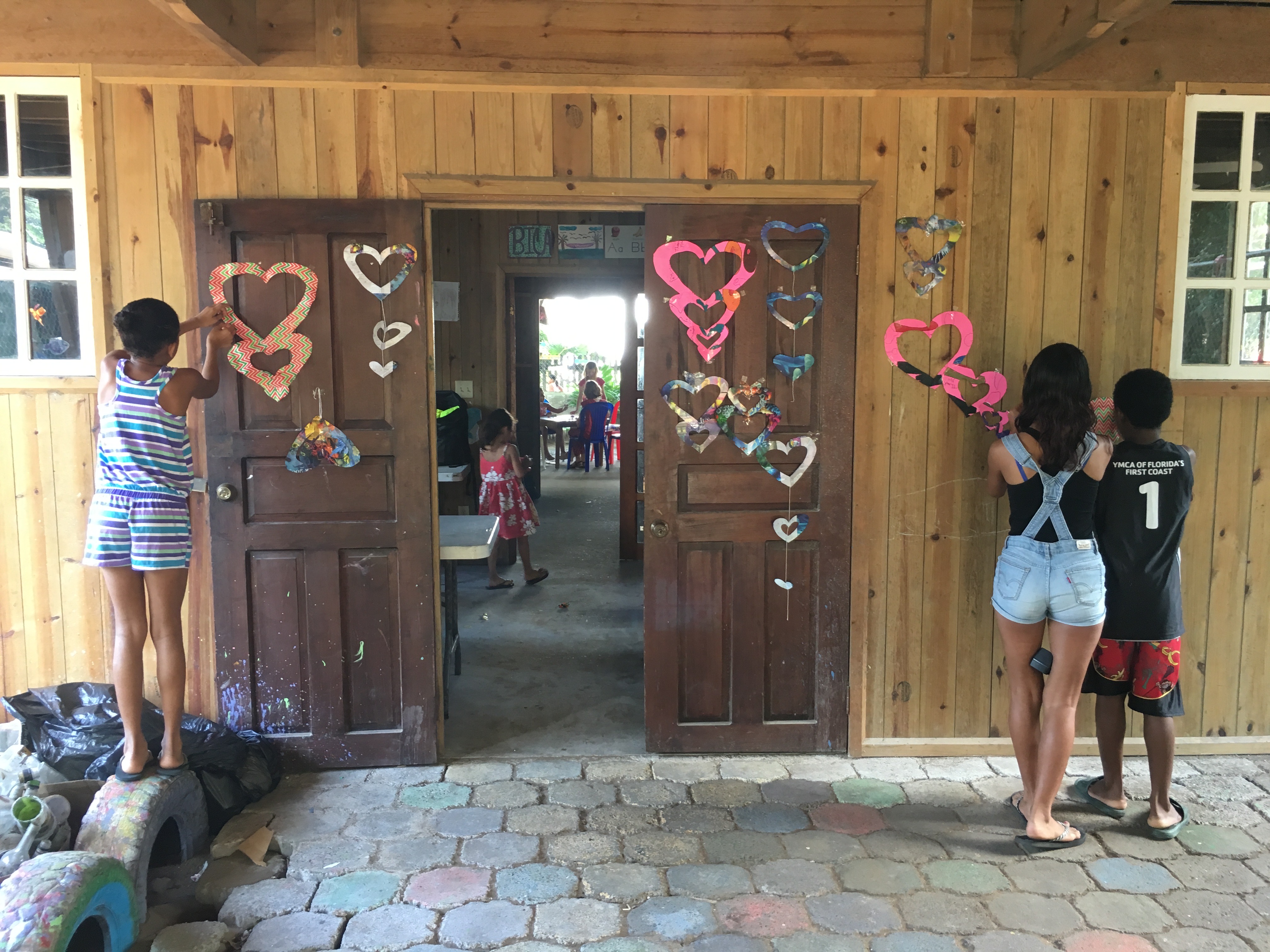
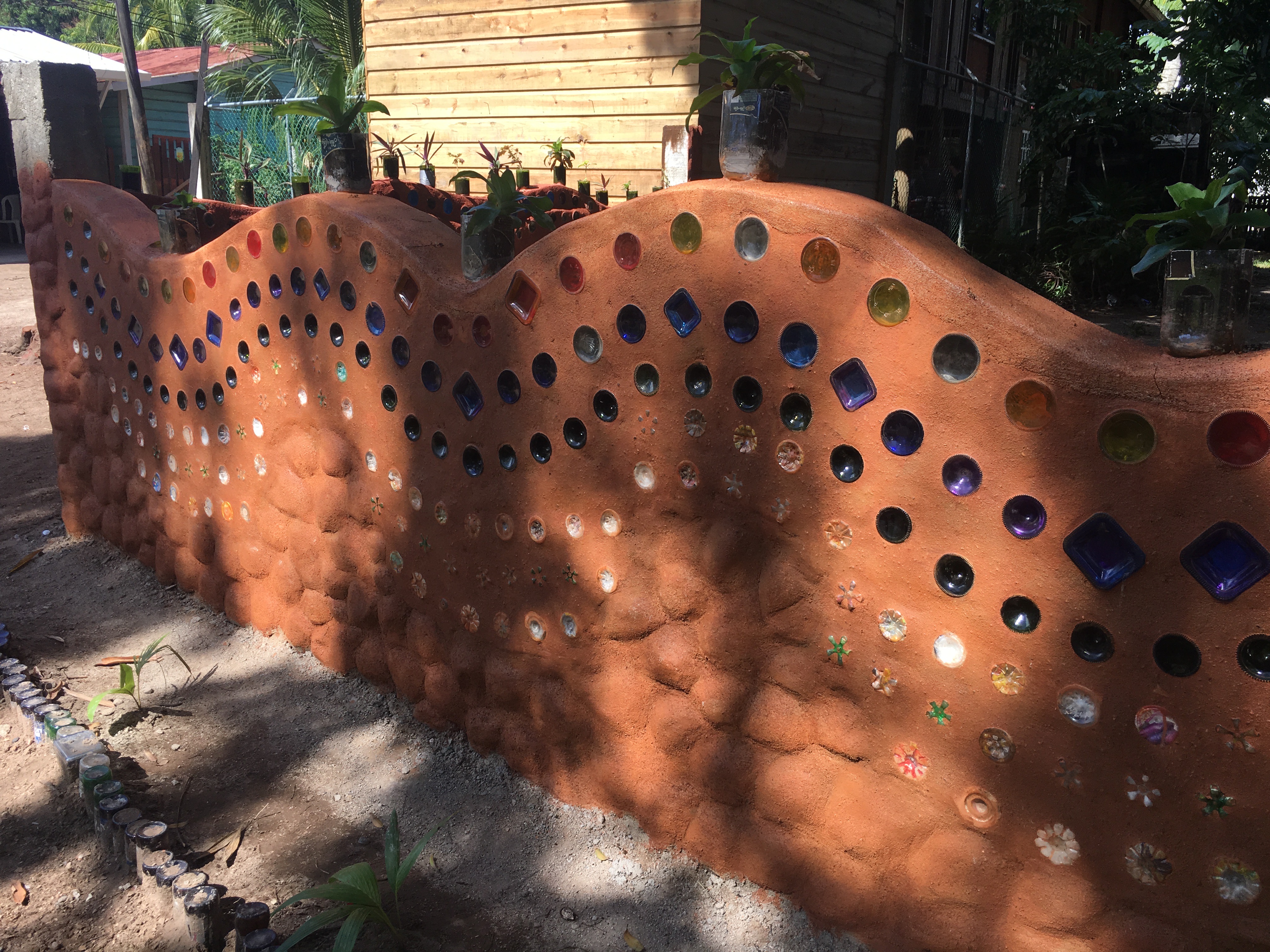
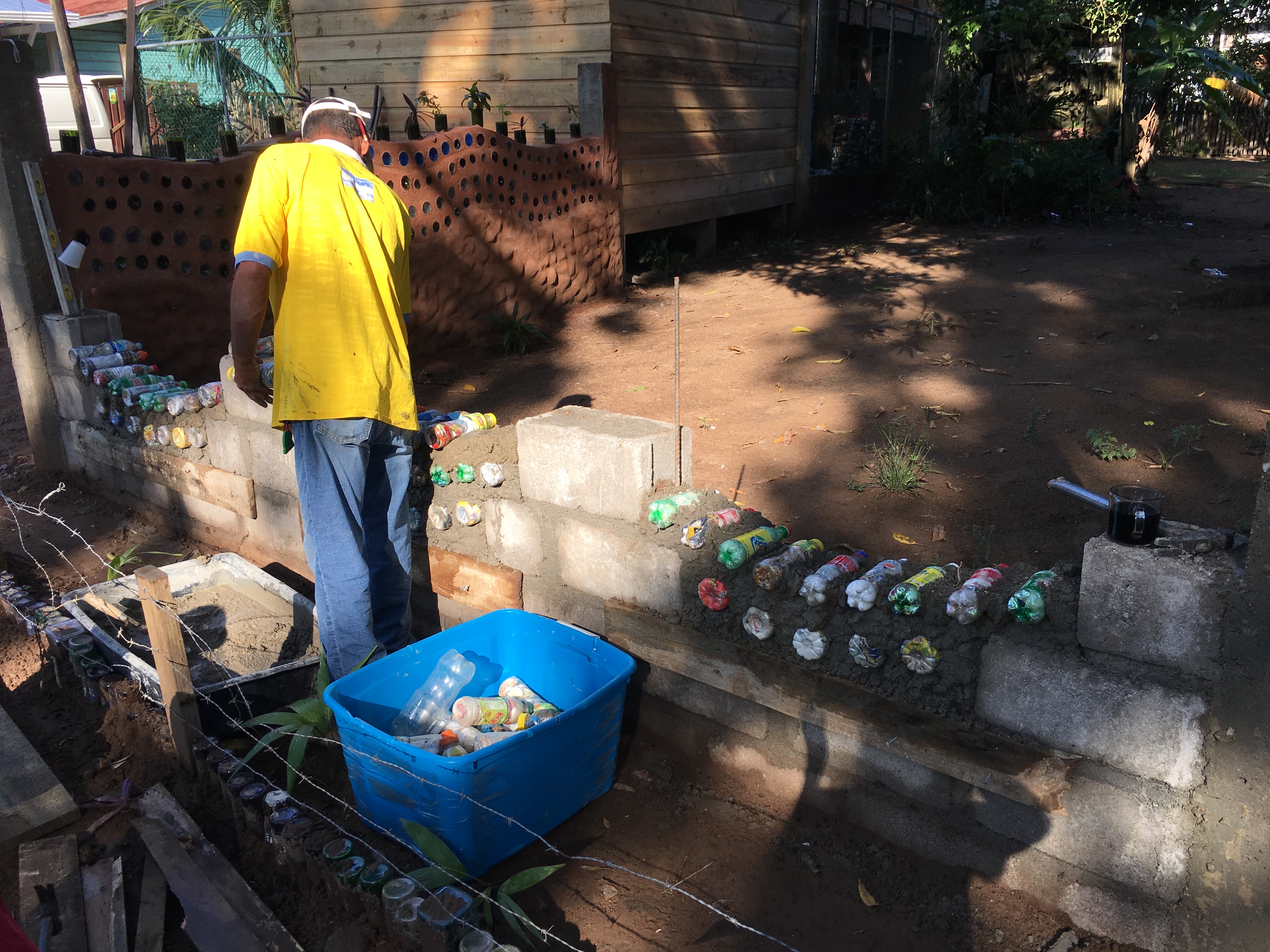
The SOL Foundation and BICA share a building in Sandy Bay, in a relatively poor neighborhood. SOL (School Of Life) supports neighborhood kids in a variety of ways. They provide meals, tutoring, a safe place to play, a backpack program and sports teams. It is a beautiful, vibrant community center that is so welcoming and always full of kids. We helped twice at SOL, once working directly with the children and once helping with a building project. Trash, and plastic in particular, abounds on the island, and SOL has a creative way to reuse some of that plastic. Children collect plastic bottles and other plastic trash and then stuff the bottles with the plastic. And I mean really stuff – using rebar to pack it in – because the bottles have to be as stiff as bricks. These bottles are then used to help build a wall around the community center. It’s a beautiful process – and result.
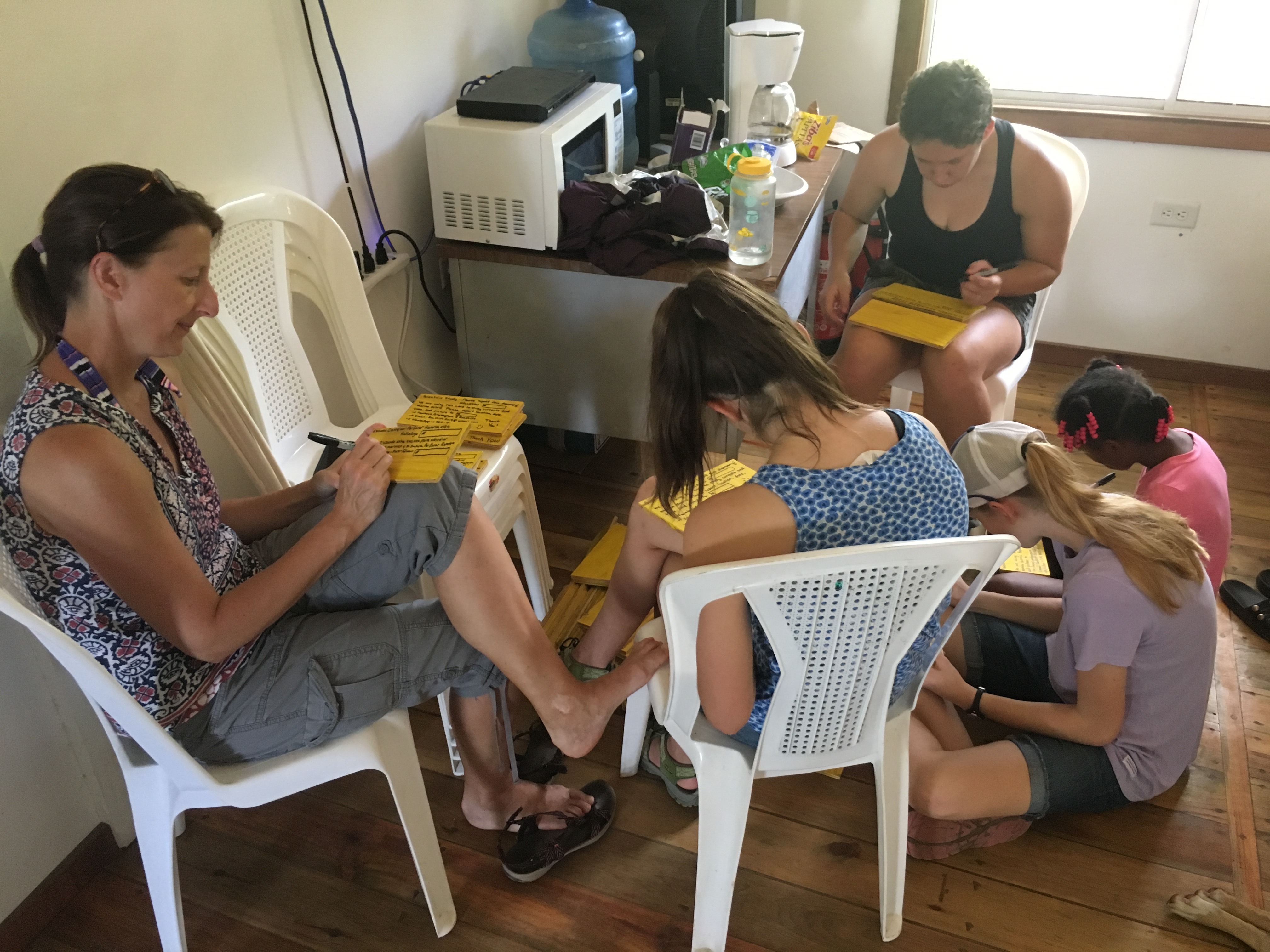
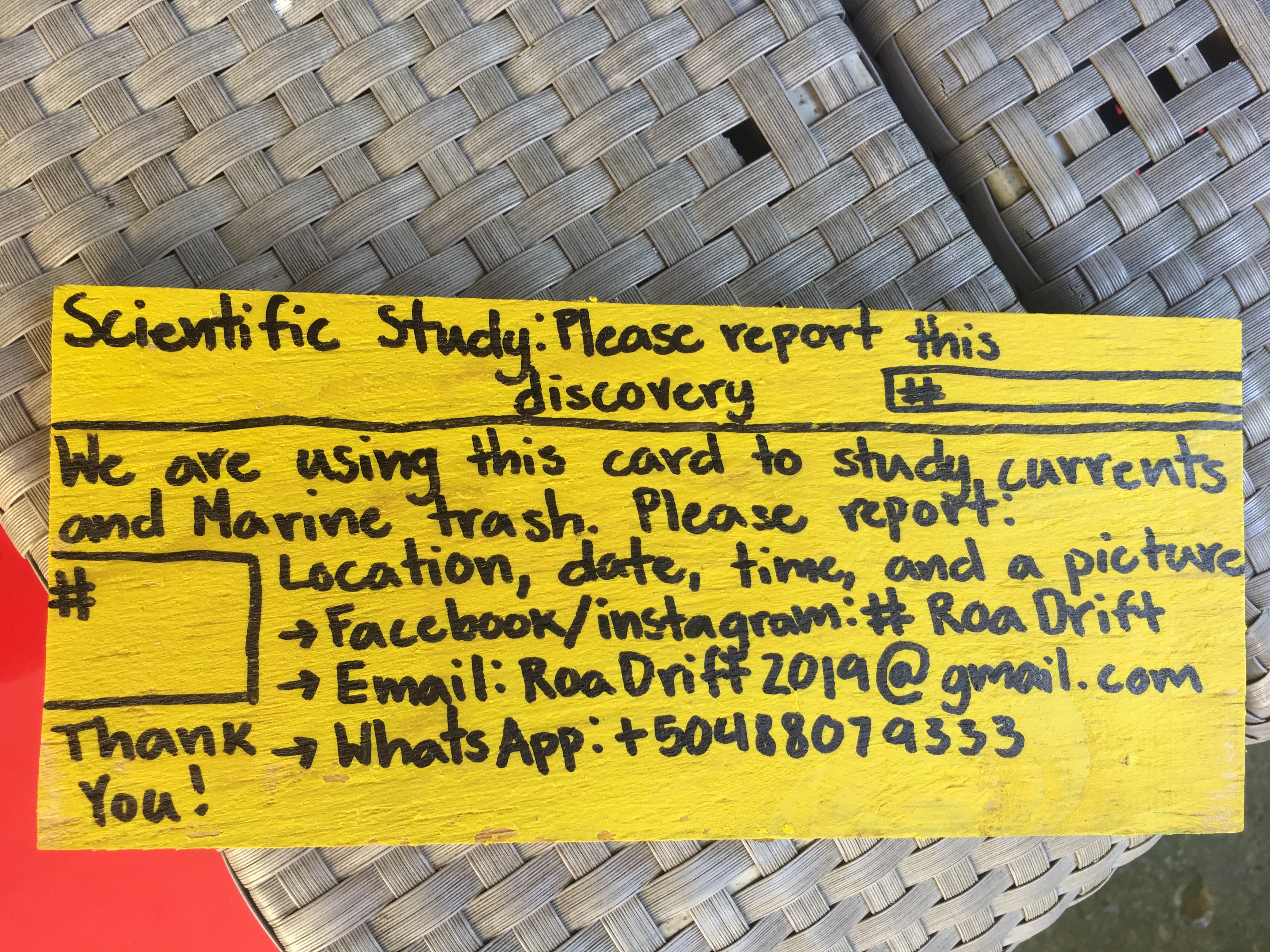
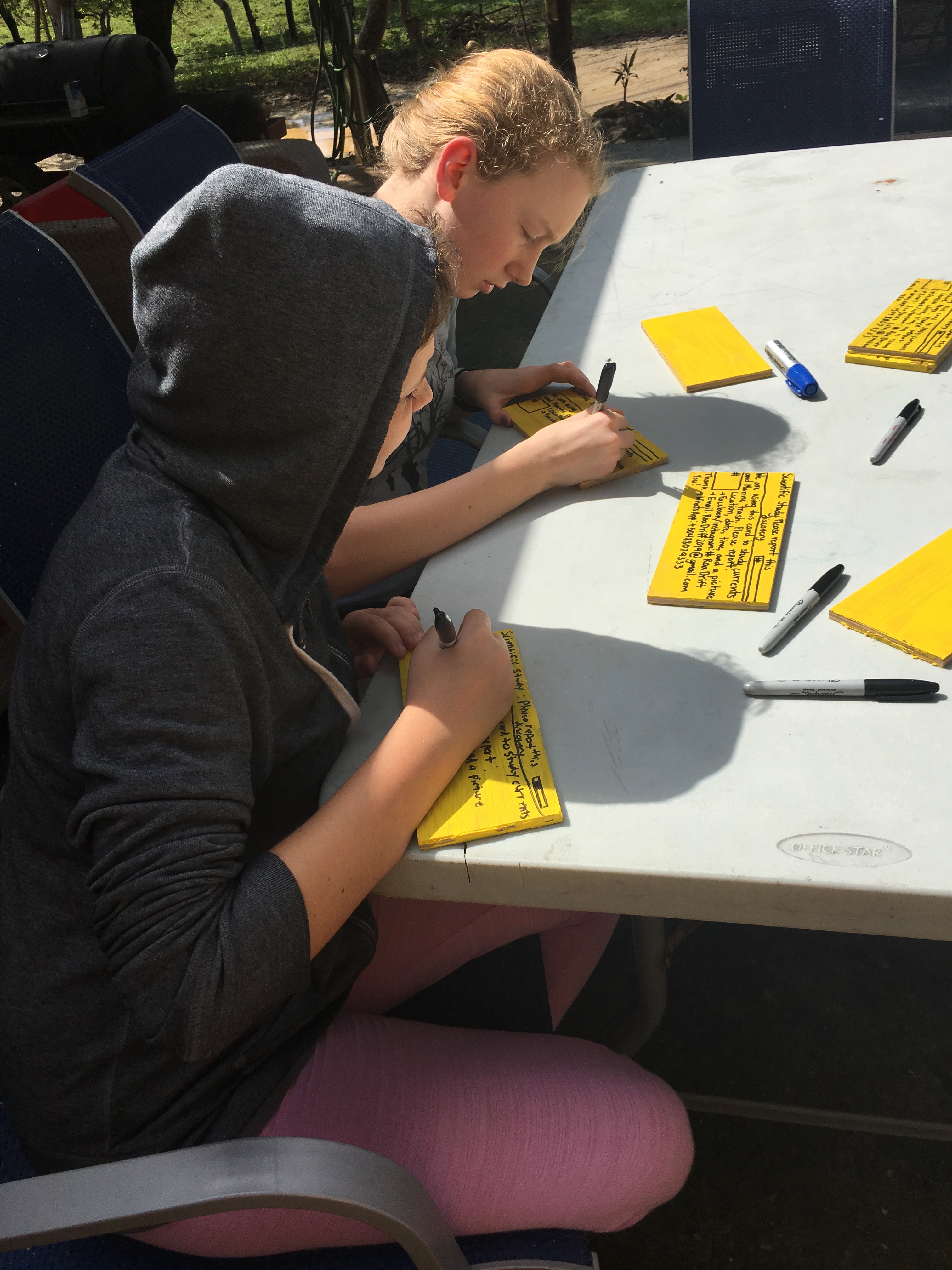
BICA, or Bay Island Conservation Association, is the other organization in this building. We helped with two of their projects: the brand audit/beach clean up that Sylvia wrote about, and a study on the ocean currents around the Bay Islands. Luther students painted 1,000 yellow boards and we helped write instructions on them. The photo says it all. 🙂 We want to follow up on the results so we’ll be checking in on Facebook!
It has been great to make connections with organizations on the island, mostly because of the internships that are set up for the Luther class. We have students working at both BICA and SOL and we enjoy learning what they are doing and joining them at times. We have really appreciated meeting new, delightful people, having experiences unlike anything in the States, and learning so much – about people, the island and oceans, and the importance of connections.

Leave a comment

Luther’s Roatan Jterm Course

While Rachel and the girls have been writing about many aspects of our experience in the Bay Islands of Honduras, I was asked to write a post about why we came, for a Luther College January term course. I’ll try to give you some background without (hopefully) boring you with too much detail.

Luther sends 350-400 students all around the world every January for month long courses. If you want to travel vicariously, check out the student blogs for the 18 Jterm off campus courses this year. Roatan is a new place for the college and this is a new type of course. While many courses travel to multiple places, we are embedded here on the small island of Roatan for three and a half weeks as our students do mini internships with non-profit organizations while exploring in depth this fascinating little island. We wanted depth over breadth and the chance to form relationships with locals while gaining work experience and perspective through assisting locals working to address the many challenges Roatan faces.

The course is called “Roatan: Ethical Engagement in a Changing World.” Here is the full Course Description:
This course uses the island of Roatan as a case study to examine how individuals can engage ethically with social and environmental challenges in the developing world. Roatan, Honduras, is home to the world’s second largest coral reef and the tourist industry it supports, as well as a long history of colonialism that has left the island with an ethnically and linguistically-divided population, widespread poverty and environmental degradation.
During our month on the island, students will examine the ways in which the people, culture, and ecosystems of Roatan are responding to changing social, economic, political, technological, and environmental factors. Working closely with local health, education, and conservation centers, we will observe the individual loci of change, and explore the systemic forces that are helping to shape the island. Daily presentations, excursions, and group reflection time will lay the foundation for students to understand the rich history and culture of the island. Each student will also undertake an internship with a local NGO, such as a private medical clinic, bilingual school, or marine conservation institute. The course is open to students of all majors and is ideal for those who seek a life of meaningful engagement in a larger world.

I am team teaching with Victoria Christman who directs Luther’s Center for Ethics and Public Engagement and also has her own blog about Roatan. We have 14 students from 8 different majors. All of them are working with NGOs on the island — 4 in health care, 5 in schools, and 5 working on environmental education and conservation.

Here are links to all the organizations that are internship placements as well as a few photos.

Clinica Esperanza – 4 students
Bay Islands International School – 2 students
Roatan Bilingual School (ESBIR) – 2 students
Island Academy – 1 student
Roatan Marine Park – 2 students
SOL Foundation and BICA (Bay Islands Conservation Association) – 3 students

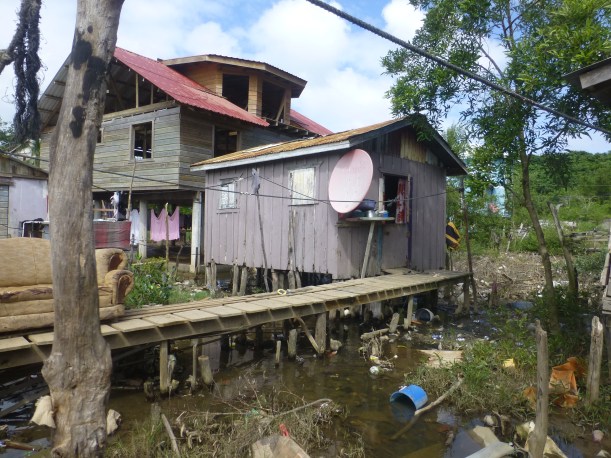
Intense poverty is common on the island
Our students doing a beach clean up and “brand audit” on Sandy Bay beach. They record each piece of trash they find (it’s everywhere) including what company produced it and what type it is. Coca-cola was the clear winner (or loser)!

SOL (School of Life) uses trash to create eco-bricks and beautiful walls made of trash as a way to teach sustainability and create boundaries for their community green space.


1 Comment

Coral Reef Restoration

By Sylvia

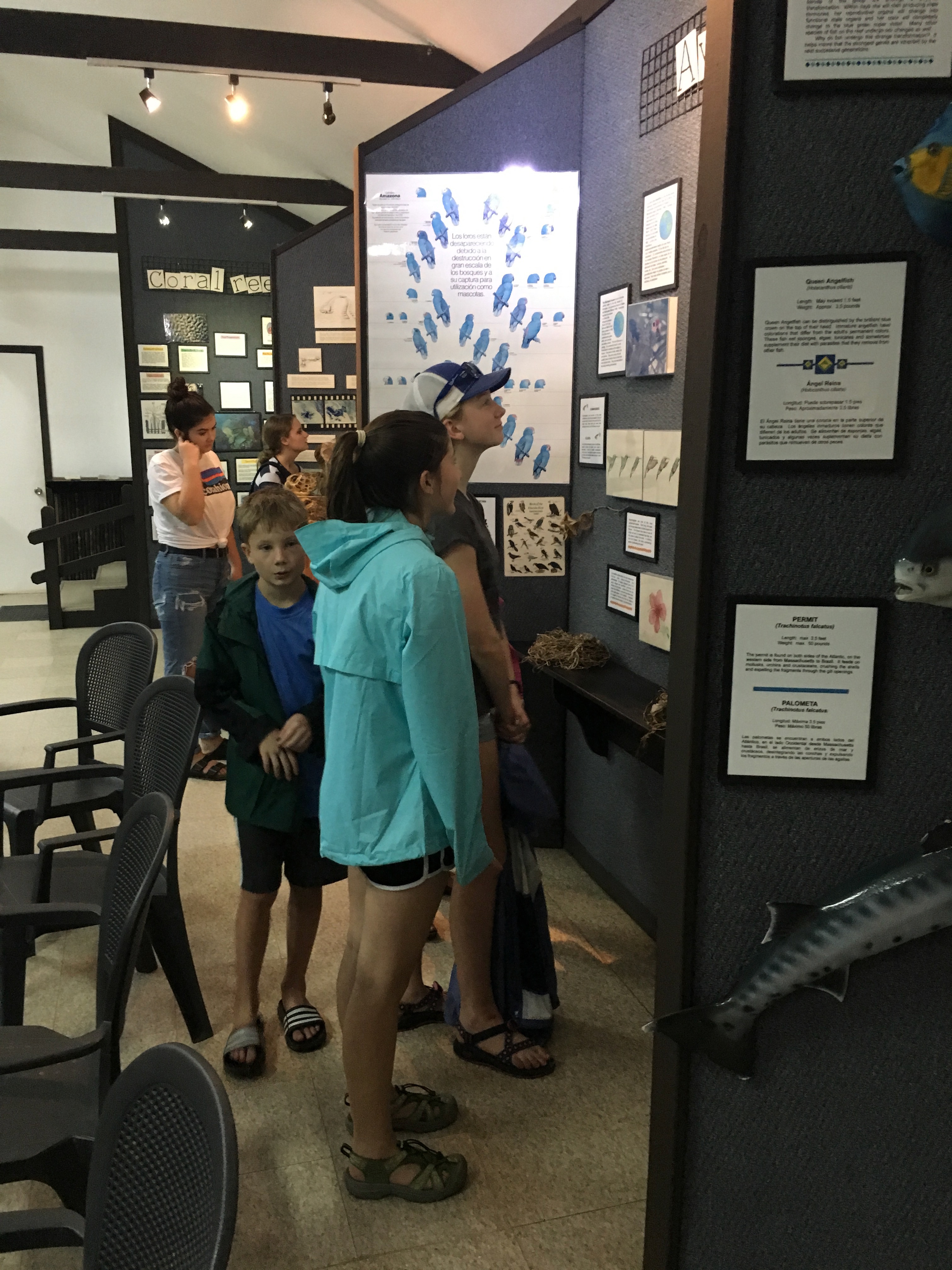
One afternoon last week, we had the amazing opportunity to go to Anthony’s Key Resort to look around their museum on the history of Roatan. We also attended a presentation by someone who works at the Roatan Institute for Marine Sciences (RIMS) that is in a building at Anthony’s Key Resort. It was fun to look around the museum and see artifacts from the indigenous people, the Spanish and the people who moved here from the mainland.

https://anthonyskey.com

https://www.roatanims.org

After that, we went into a classroom area and listened to a presentation about coral restoration by one of the people who works at RIMS. It was so interesting! I want to share some of the cool things that we learned there!

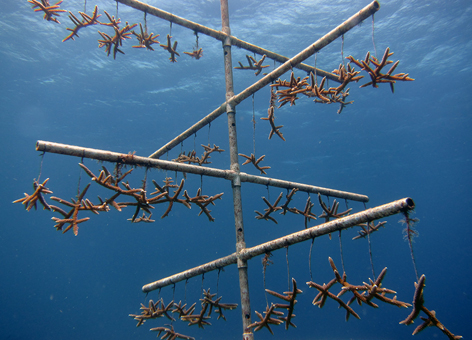
When you hear coral trees, you probably think about a big tree with red flowers on it. But I am talking about a fiberglass tree structure that is anchored underwater to help regrow corals that can then be replanted out on the reef. RIMS has about 20 coral trees that they maintain with two different species of coral. Staghorn and elkhorn coral are the two fastest growing corals and because of that, they are great for coral trees. The idea behind a coral tree is to provide a place for corals to grow quickly, so that in a year, you can cut the small growths off of the bigger animal and then transplant them onto the reef.

A coral tree!

Until about a year ago, staghorn and elkhorn corals were the only corals that scientists knew about that could regrow themselves that quickly. But recently, new research at the Mote Marine Laboratory and Aquarium in Florida has found new ways to quickly grow other types of coral. Dr. David Vaughan first discovered this new method for growing giant corals quickly. He realized that if you break a piece off one of these giant corals, therefore putting the coral under stress, it will grow more than 20 times as fast as it would in the wild. Because of this, people can now start transplanting other types of giant corals onto the reef to diversify the new growth. If you would like to learn more, you can watch this video: https://www.youtube.com/watch?v=e7n19msJhmQ


Leave a comment

Homeschool

(Note: this is Part 1 of several posts I want to write about our learning experiences on the island. In addition to our planned lessons, we have learned through our experiences. These are more text heavy posts, but that’s partly because I haven’t been writing in my paper journal so I’m putting my words down here, on-line. 🙂

Aside from math (which Sylvia does with Sophia, and Lily does with me), we have been studying the geography and history of Central America, Honduras and Roatan. We can now all name the 7 Central American countries and their capitals. Can’t say I had mastered that before now. We’ve also talked about US foreign policy, particularly in Nicaragua, El Salvador and Guatemala in the 1950s-80s and I have especially enjoyed that. Growing up during part of that, I recognized lots of names: Daniel Ortega, Sandinistas, Oliver North. But until now, I couldn’t really tell you much about any of them. I have a much better understanding about that era now. And the girls got lessons in communism, the Red Scare, Ronald Reagan, and US foreign policy. 🙂

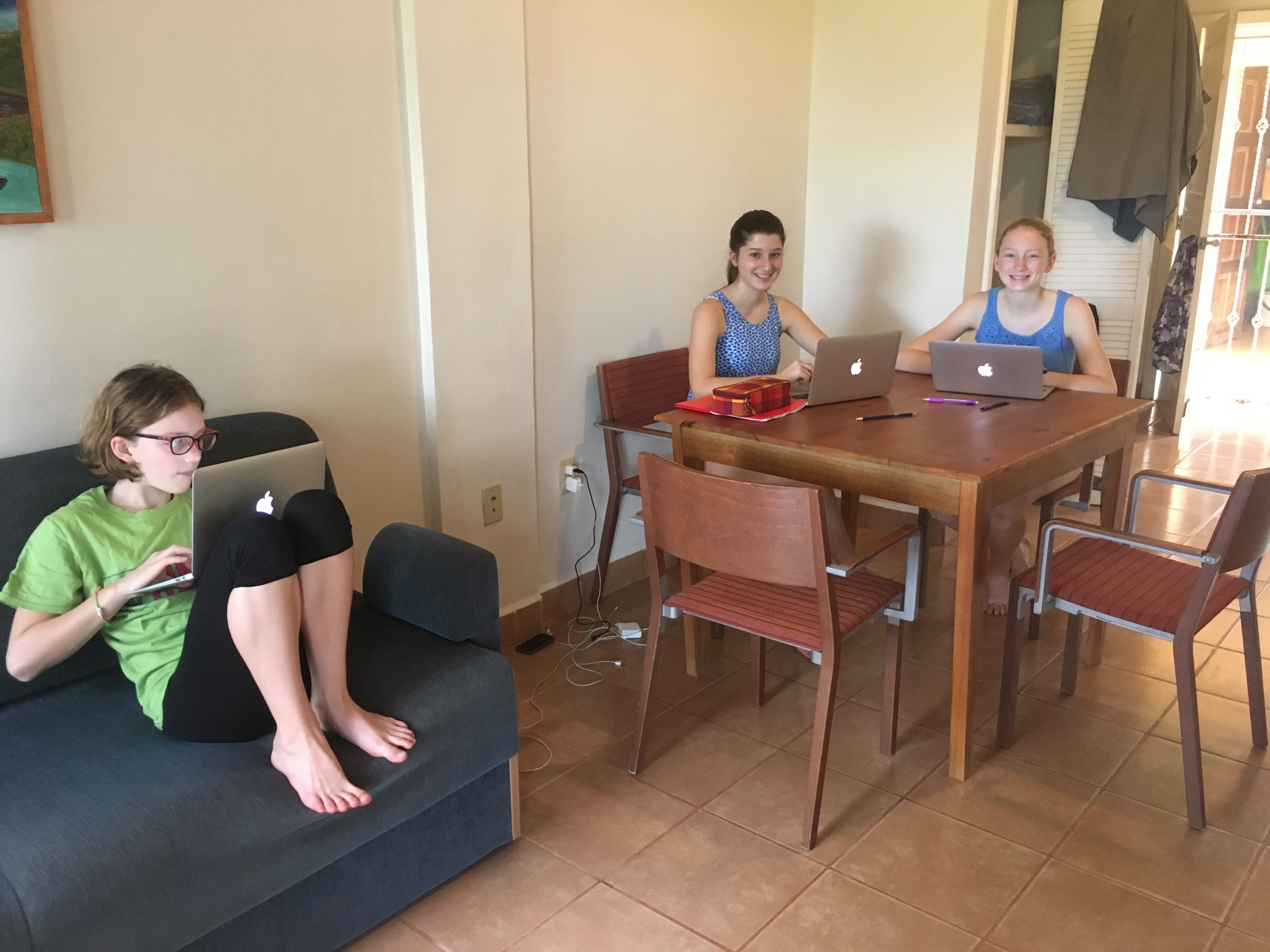
Just like in the States, I am homeschooling the girls during our stay here. They have some work from their public school classrooms back home – Sylvia in particular has to keep up with her math – but we are also learning about the island around us. We spend the mornings at our apartment and in the afternoons we often venture out to explore.

We have also studied Honduras, the Mayan civilization (which includes part of modern day Honduras), and Roatan in more depth. Roatan’s history is fascinating. The indigenous people are long gone, after Spanish explorers first came here and brought their diseases. The oldest population of current residents are the Garifuna who were deported from St. Vincent in the late 1790s. About 40 years later, British settlers, followed by newly freed slaves, came from the Grand Cayman Islands. Roatan was even under British rule for a while until 1850. Most recently, Spanish from the mainland have been coming over in droves looking for better opportunities. And finally, we have the North American tourists and missionaries (Canadian more than US) who come for a visit and then decide to stay. It all adds up to a super interesting cultural experience on the island.

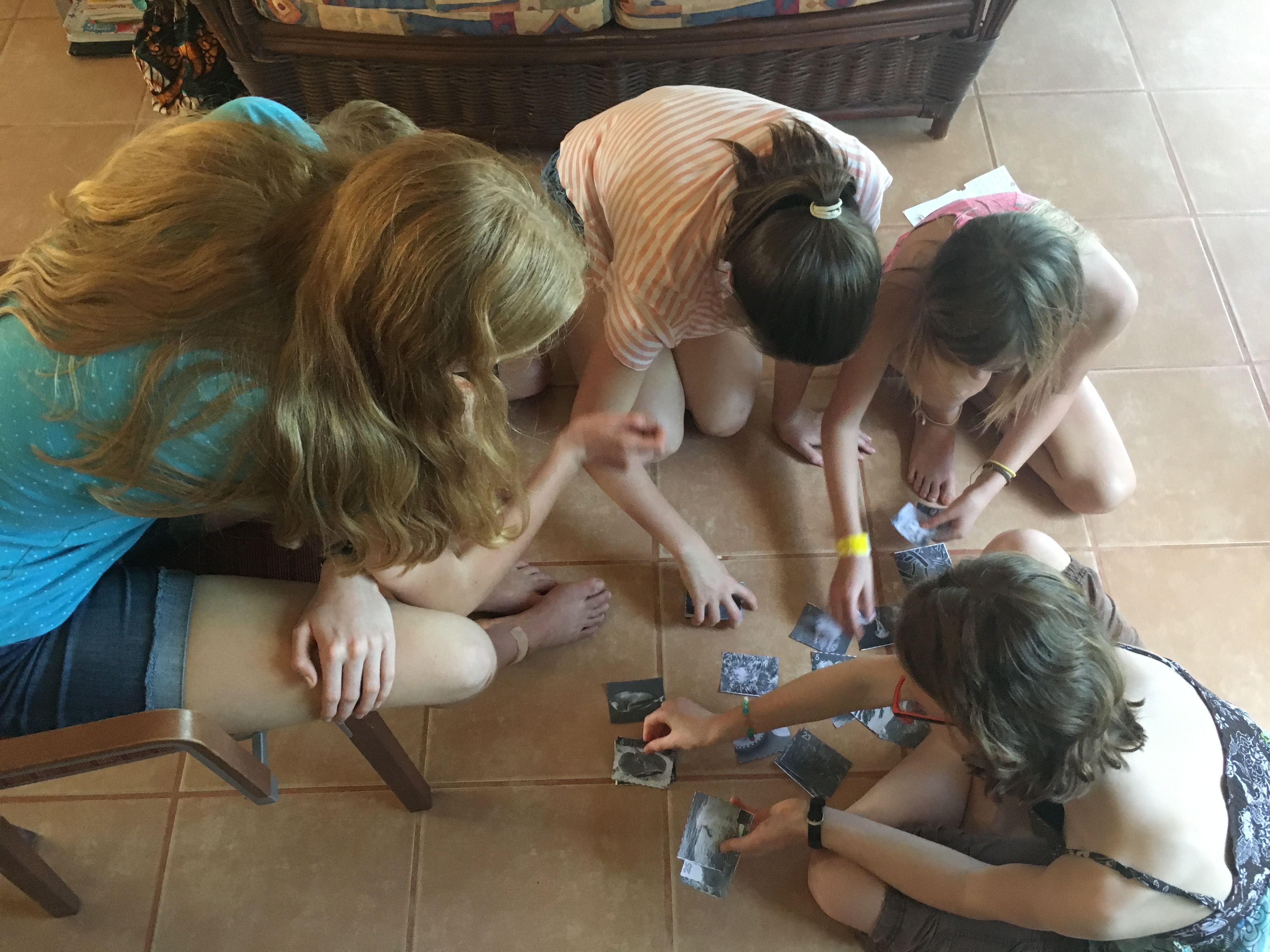
One more topic of study has been marine biology (coral reefs in particular) and a little bit about Darwin and his theory of natural selection. I have been leading the science class for Sylvia and Lily as well as the Christman kids. It has been super fun to have all 5 kids together to play games, do activities and learn together.


Leave a comment

Golf Carts

By Lily♥♥

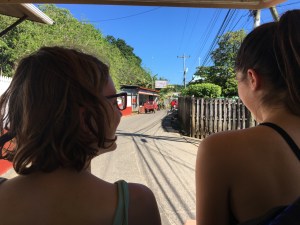
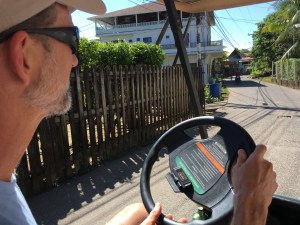
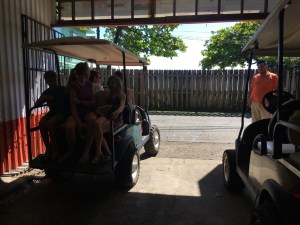
This past weekend we went to Utila. Utila is an island an hour’s boat ride away from Roatan. We got on the boat at 2:00 in the afternoon and got there at three o’clock. The next day we went to The Iguana Station in the morning and then went back to the hotel for lunch. After lunch came the best part of the whole trip, at least for all the kids. There are almost no cars on the island, mostly tuk-tuks, motorcycles, and golf carts. We rented two four-person golf carts for the rest of the day. First, we headed out for a good snorkeling spot. A third of the way there, the road turned into a mixture of dirt and gravel. It had a few thousand pot holes and a couple rope speed bumps. We went zooming along, grunting at every pot hole and laughing the whole way. After that we went to a public beach on the other side of town. The ride was the same for much of the way. Then to seal the deal, we went way back in the other direction to yet another public beach. We certainly used those two four-person golf carts well.


Leave a comment

Utila: iguanas, beaches and more!

We spent the weekend in Utila, one of the three Bay Islands along with Roatan. On Friday, we settled into our rooms and then walked around Utila Town to get a feel for the place. We liked that there are very few cars, but the tuk-tuks and motorcycles don’t make it that much safer to walk around. 🙂

We spent Saturday morning at The Iguana Station, a fantastic NGO that supports the Swampy Iguana – a species endemic to Utila. They have a research lab, do educational outreach and have a breeding program. The biggest threats to the Swampys are habitat loss and hunting. The Iguana Station’s work includes planting Black Mangroves (the preferred habitat), providing economic alternatives to hunting, education, and captive breeding. They take volunteers and interns from all over the world. These iguanas are so awesome that I just might join the ranks some day.

http://www.utila-iguana.de

Saturday afternoon was gorgeous so we spent our time on the water, in three different places. We started off by snorkeling at one end of Utila Town then driving to the other end to hang out at a public beach, and we finished the day at yet another public beach in the middle of town. All were delightful and fun.


Leave a comment

Snorkeling

By Rachel

While Jon ventured out into the SCUBA world, the girls and I have been satisfied with snorkeling and all the amazing things we can see from the top of the water. The weather has not allowed for endless snorkeling – between rain and waves and murky water, we have only had a few opportunities to get out. But we have made the most of the good days and have snorkeled at West Bay, West End and Utila. See photos below! (When you hover over them, you will see a caption with more information.)

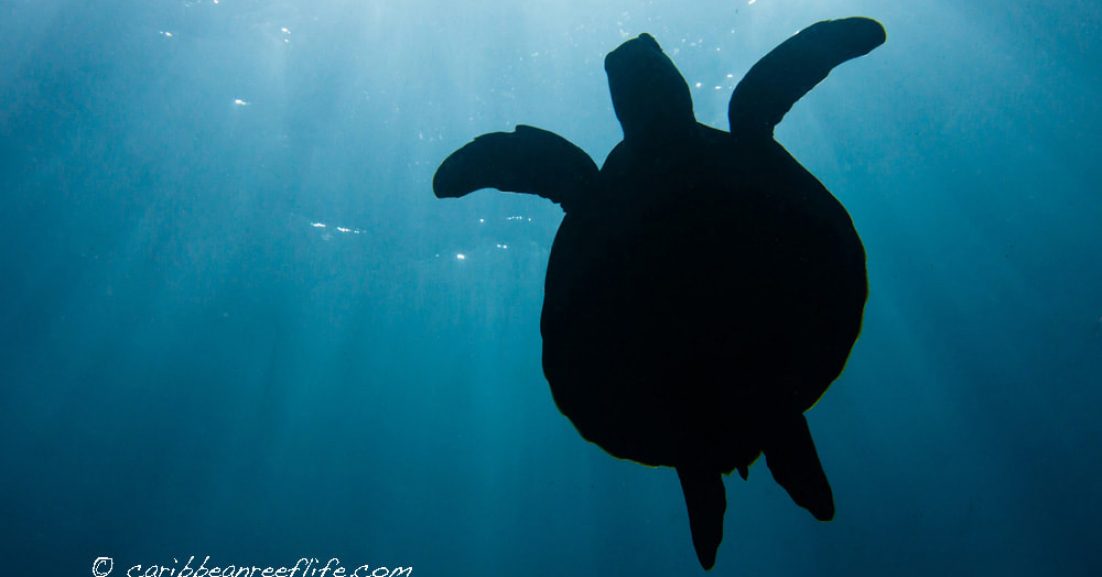
The reef is absolutely amazing with so many colorful fish of all sizes, corals, anemones, eels, sponges, and sand dollars. Some of our best sights: a sea turtle (Jon) and a squid (Rachel). We’ve been studying marine life (in the water and on land), and our learning increased exponentially when we had a guest speaker come talk to us about the reefs. Mickey Charteris is a professional photographer and diver, and has published an amazing book called Caribbean Reef Life. We learned so much from his presentation and we continue to learn as we regularly thumb through his book.

We look forward to a few more snorkeling outings before we go. I really want to see a sea turtle!!


Leave a comment

Helping Other People (part 2)

By Sylvia

The other opportunity we had to help people (and the environment) last weekend was helping with a beach cleanup in Sandy Bay. It was organized by BICA (Bay Island Conservation Association), a NGO where some of our students have been interning. I expected them to give us trash bags and gloves and tell us to pick up as much as we could. But, we were participating in a Brand Audit, where you record the brand, type of product, type of plastic and amount of each thing that you find. We ended up going out  with a trash bag, gloves, a clipboard and multiple pieces of paper to identify each thing. It was fun, but sometimes things were so faded that you couldn’t read anything on them and everything smelled really bad. However, it was really nice to know that we were helping to save the reef (and the world)!


Leave a comment

Scuba Diving!!!

By Lily ♥ ♥

        Most of our students took an exploratory scuba diving class over the weekend as part of the class. Half of our students went on Saturday and half went on Sunday. One professor went with each group. My dad and eight students are going to get their open water diving certificate, which means that they can go out on organized dives. They have to watch four hour-long videos and spend four afternoons diving to get their certificate.


Leave a comment

Helping Other People (part 1)

By Sylvia

This weekend we had two opportunities to help this island and the people who live here. This is part one!

The first opportunity was to help out with an event that was giving away shoes, school uniforms and school supplies to kids here. December through February is the “summer break” for the public schools here so this was a big back to school event for those kids.  This event was very interesting to help out with because I got to learn a lot about Roatan’s public school system. One of the most interesting things that I learned was that even though the public school is free, the students have to buy their own uniforms, school supplies, backpacks and shoes. Some kids on the island cannot go to school because they can’t afford their own shoes. The kids of the other professor, Sophia, Elsa and Lawrence, went with us and we sized kids feet and then found shoes that were the right size for them. All of the shoes were TOMS, who donate one pair of shoes for every one pair sold. While we were handing out shoes, other people were helping kids try on shirts, pants and skirts, and some were handing out backpacks and school supplies. After that, we fed them all lunch and then we went swimming for a while. It was a really neat event and a really cool way to support the less fortunate.