
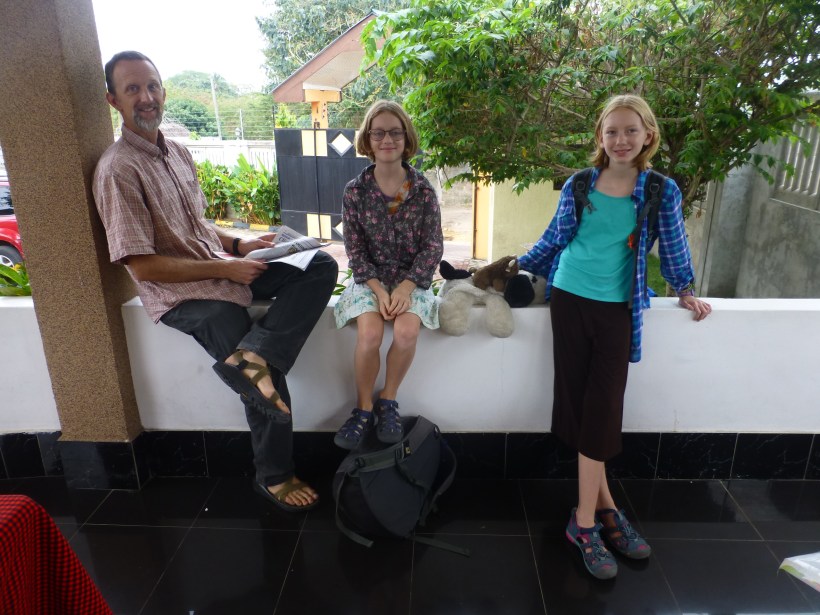
If you read Bison’s post, then you know that we spent 2 days in Bagamoyo last weekend. Bison really likes historical ruins (according to Lily) so Bagamoyo was a perfect place for him. Here he is getting ready to go out with us:
I also like historical ruins and especially the stories that go with them. I am finding Tanzania’s history to be so interesting. From the early Arab settlers to the Portuguese, German and British influences, Tanzania has seen many changes in the relatively recent past. Bagamoyo showcases many of these events.
One of the most interesting things about Bagamoyo is that it was the center of a huge slave trade in East Africa. Because it is close to Zanzibar, it became the main port of the East Africa coast, and through the port came ivory and slaves. Over 1.5 million slaves were exported. About a quarter went to Arabia, India and Persia, but most stayed in Zanzibar or on the coast working on spice farms, and coconut and rice plantations. Bagamoyo means “lay down your heart”, referring to the slaves who marched from the interior: they could finally rest after their journey, but also, it was the last time they may ever see their homeland again.
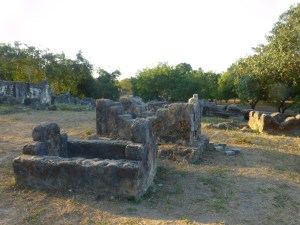
Tombs from the early settlers of Bagamoyo – African traders and explorers from the interior (late 1700s-early 1800s).

Germany occupied Tanzania as part of German East Africa from 1885-1919. These are German tombs in Bagamoyo, from the late 1800s.
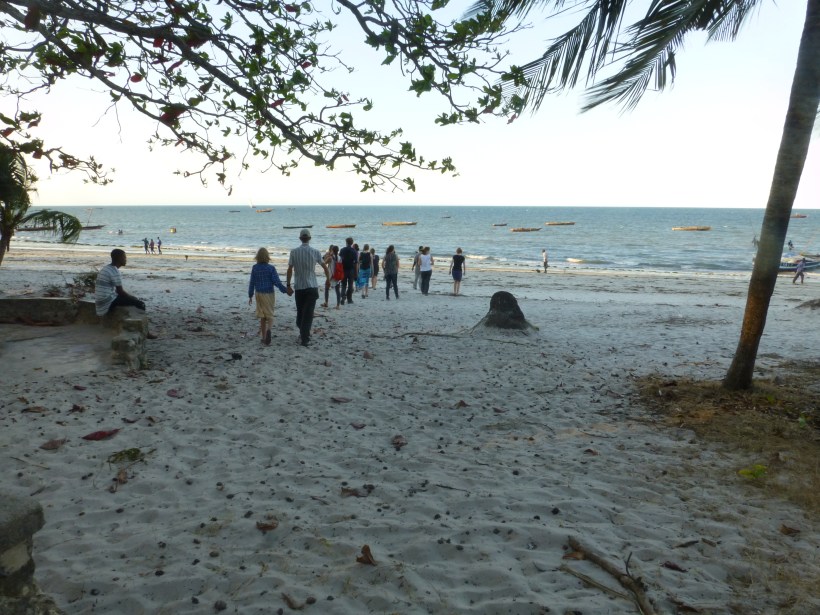
Bagamoyo is right on the Indian Ocean, so of course it has a lovely beach.

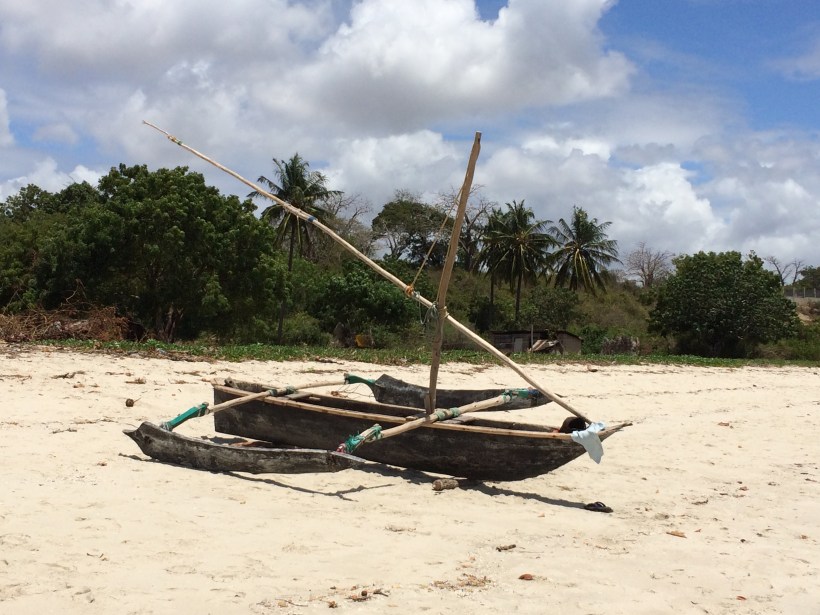
These vessels make nightly trips to Zanzibar, carrying goods such as cooking oil, tomatoes and charcoal from the mainland to the island.
As we were leaving the beach, we noticed a large truck full of cattle that were going to be loaded onto these boats to take to Zanzibar. The cows were going to be used (sacrificed) in the upcoming Eid al-Adha celebration. Zanzibar is mostly Muslim and Eid al-Adha is a very important holiday, celebrating Abraham’s sacrifice.
The next day, we visited some older ruins about 5 km south of Bagamoyo. The settlement, Kaole, was a Persian community, and flourished in the 14th and 15th centuries. The ruins contain the oldest known mosque in Eastern Africa (Bison had his picture take with the mosque).
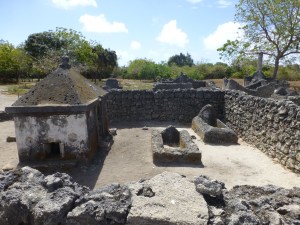
More graves. The building on the left is a special prayer hut that people still use today (burning incense and breaking coconuts, although it strongly discouraged).
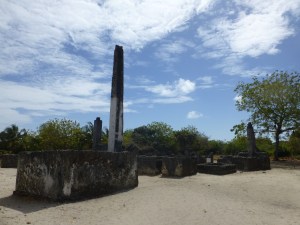
Most of what is left of Kaole is a burial ground. The tall structures are tombs for the iman and his wife.

We also learned some natural history. Here we are learning about the ebony tree. We also learned about Neem trees and the mangrove swamps.
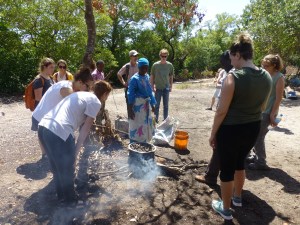
And here we are learning about little snails that live in the mangrove forests. They are collected by the hundreds, cooked and then sold as food. (We did not try any!)
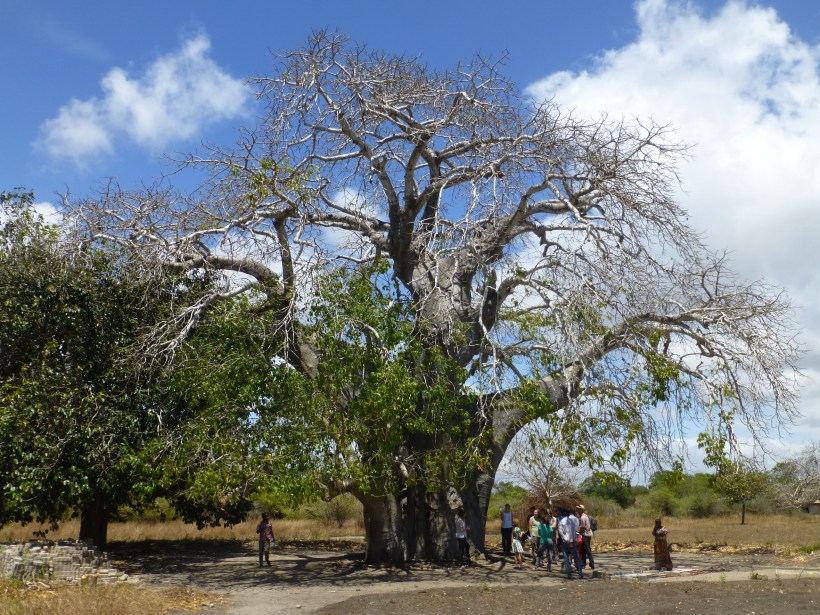
I love the baobab trees! They are so amazing. Right now they are losing their leaves to reduce the amount of water they lose through their leaves.
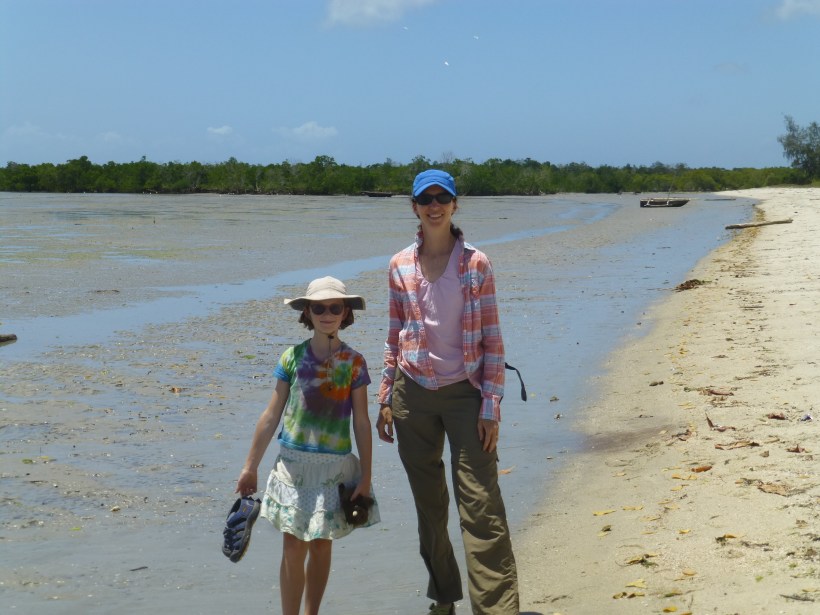
We walked back to Bagamoyo on the beach.
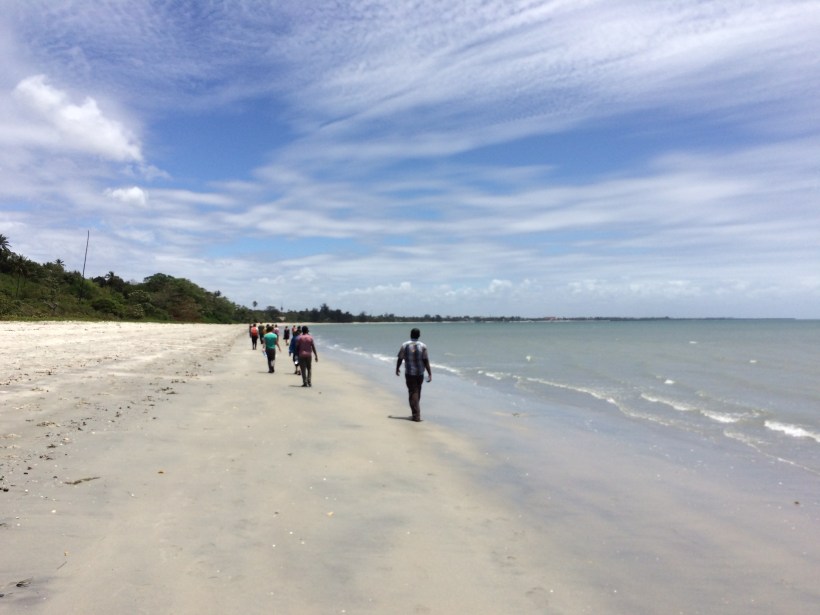
It was fun to watch the tide come in and walk in bare feet!
 SylLy Acres